

Learn more about PMI foam board
2025-12-27
What is PMI foam?
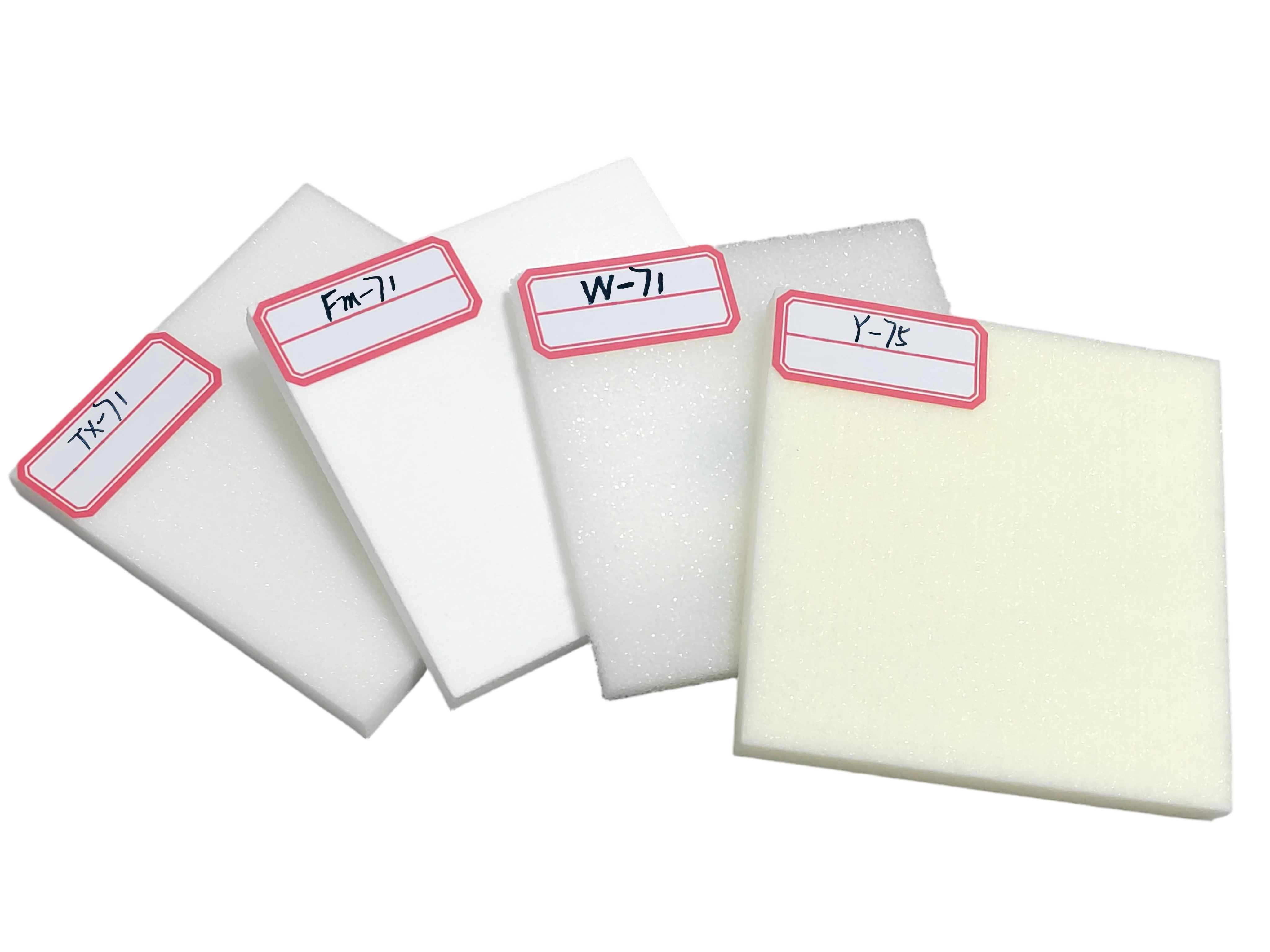
Polymethacrylimide (PMI) foam is a cross-linked, rigid structural foam material. The base resin is a copolymer of methacrylic acid (MAA) and methacrylonitrile (MAN) and is produced using a unique solid state foaming technology. PMI foam has a 100% closed cell structure with excellent all-inclusive properties. Its uniformly cross-linked porous structure gives it good mechanical properties, thermal deformation and chemical stability.
Why use PMI foam?
Excellent mechanical properties: Has high specific strength and high specific modulus. Its tensile, compressive, flexural and shear strengths and modulus are significantly superior to other foam materials or lightweight wood-core materials such as PVC, PU and PET, and it is isotropic. This can improve strength, increase rigidity and reduce weight.
Excellent high temperature resistance: It has a unique cross-linked structure and imide ring structure, has good high temperature stability and pressure resistance. The thermal distortion temperature exceeds 200℃, which is suitable for high temperature molding or autoclave co-curing process. This can reduce process time, improve production efficiency, and improve structural performance.
High Closed Cell Rate: The closed cell rate reaches 95%-98%. When used in composite sandwich structures, it avoids problems with moisture absorption and delamination of honeycomb core materials, improves safety performance and extends service life. Due to its high porosity and resistance to water pressure, it can be used as a buoyancy material underwater.
Barrier characteristics: Thanks to the high number of closed cells and small and uniform bubbles, the material has good sound insulation, heat insulation and moisture resistance.
Easy to Bond: Suitable for epoxy resins, unsaturated polyesters and other resins with high bonding strength.
Easy Processing: Easy to process, can be bent into various curved surfaces under heating conditions, expanding design freedom.
Fatigue Resistance: Its unique molecular structure provides good fatigue resistance, which is especially suitable for composite sandwich structures subject to dynamic loading.
Aluminum equivalent and dielectric properties: It has low aluminum equivalent, suitable for medical equipment production. It has low dielectric constant, low dielectric loss and good electrical insulation over a wide frequency range, and is also suitable for radar equipment.