

Help you understand the characteristics and production process of PMI foam board.
2026-01-03
Characteristics of PMI foam board
Lightweight and highly durable
Among similar density foams, polymethylene sulfide (PMI) foam is currently the rigid closed-cell foam with the highest specific strength and specific stiffness. It is significantly lighter than traditional materials such as wood and metal, while being almost as strong as some aluminum alloys.
Waterproof and moisture resistant
The pores of polymethylene ether (PMI) foam are closed and isolated from each other. Because the foam is completely enclosed, it is difficult for moisture and water to penetrate into the sandwich layer.
High temperature resistance
The polymer chain of polyimide foam has a complete imide ring structure and inter-chain cross-linking, which significantly increases the heat resistance and pressure resistance of the material, and the long-term use temperature can reach 180-250 °C.
easy to glue
Polymethylimide (PMI) foam has a highly polar molecular structure and a dense honeycomb surface. In the co-curing process of molding composite sandwich materials, it can form good adhesion with various resins such as epoxy resin, bismaleimide resin and cyanate ester resin.
easy to process
Polymethylene oxide (PMI) foam is easy to cut, thread, mill, etc. Using CNC machines, parts of various shapes can be made from it. In addition, polyurethane foam sheets can be bent into various curved surfaces when heated, expanding design and processing possibilities.
low dielectric properties
Polymethylene oxide (PMI) foam has extremely low dielectric constant and dielectric loss, making it suitable for structures that need to emit and transmit microwaves.
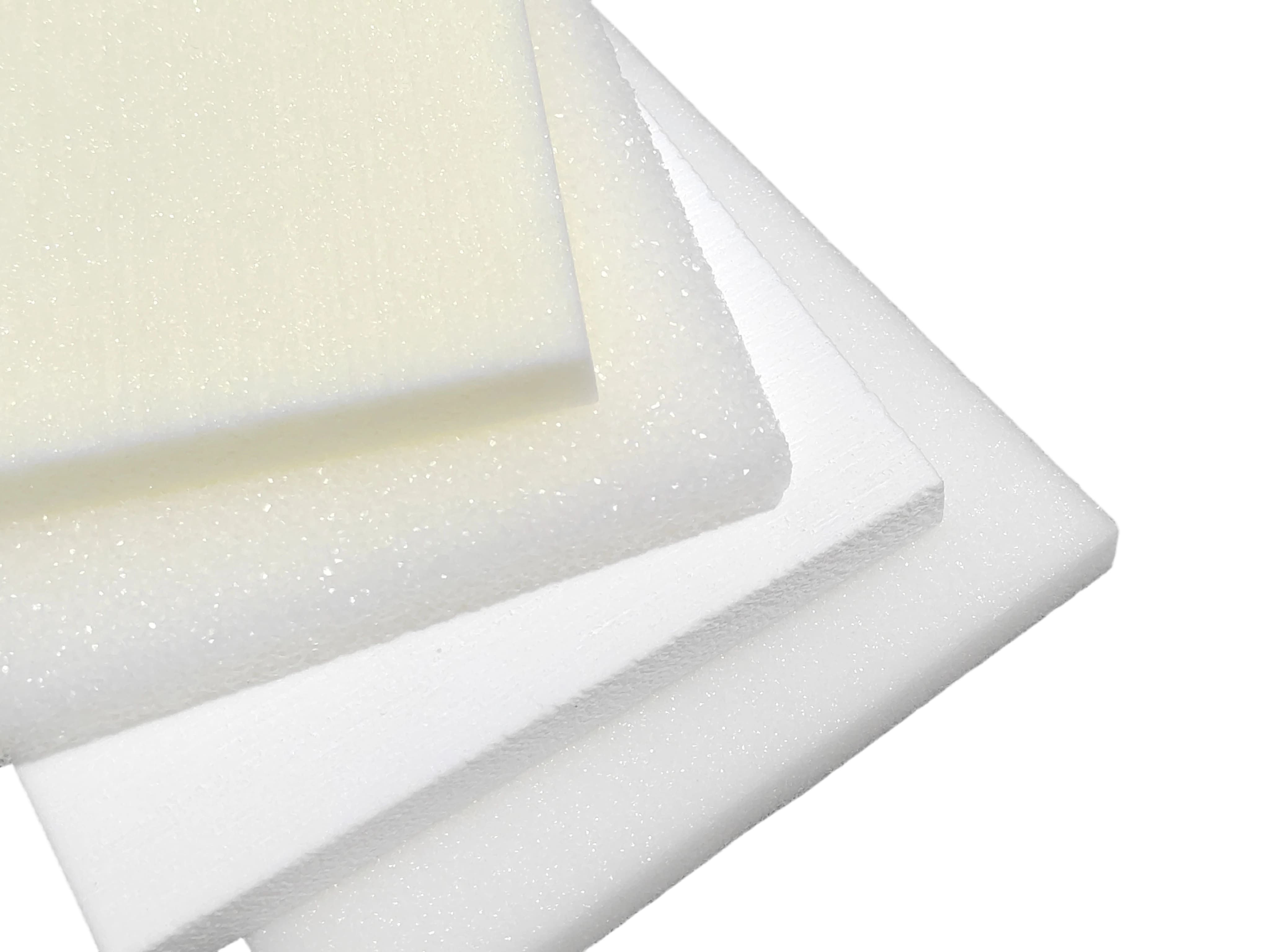
Polymethyl methacrylate (PMI) foam is produced using a precisely controlled process:
1. Dosing and mixing of liquids.
2. Pour the mixture into the mold, place the mold in a reservoir of water and heat in a water bath until foam and the workpiece form.
3. Place the workpiece in the oven for pre-treatment and heating.
4. Transfer the workpiece to a high-precision oven for final foaming.
5. Return the workpiece to the oven for further processing.
6. Finally, use the press to flatten and cut.
The entire production process is carried out in a mechanized manner combined with manual control to ensure consistent product quality.