

How to distinguish heat-shrinkable tubes with an adhesive layer from single-layer heat-shrinkable tubes and their areas of application
2025-09-20
In the electrical and electronics industry, the choice between adhesive-coated heat shrink tubing and single-layer heat shrink tubing is critical for protecting cables and components. Below is a quick guide to help you differentiate between them and choose the right product.
1. Differences in design and materials
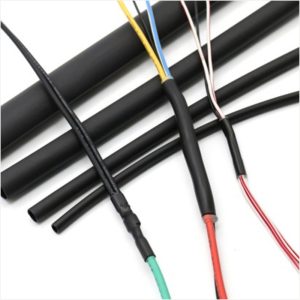
Single Layer Heat Shrink Tubing (Image on the right) Made from polyolefin, this is a single layer product. It is mainly used for insulation, identification and basic protection.
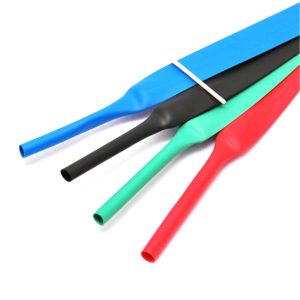
Adhesive-Coated Heat Shrink Tubing (image left) Consists of two layers: an outer layer of flame retardant polyolefin (PE) and an inner layer of clear EVA hot melt adhesive. The adhesive layer is the key difference, providing waterproofness, moisture resistance and anti-corrosion sealing.
2. Comparison of performance and technical characteristics
| Characteristics | Single Wall Heat Shrink Tube | Heat shrink tube with adhesive layer |
| Shrinkage coefficient | 2:1 | 3:1, 4:1 |
| Waterproof/Leakproof | No | Yes (due to internal adhesive layer) |
| Fire resistance | Yes (except transparent tubes) | Yes (external material) |
| Operating temperature | -55°C ~125°C | -45°C ~125°C |
| Basic Standards | UL224 125C 600V, VW-1 | UL224 125°C 600V, ROHS |
3. Applications
Choose single-layer heat shrink tubing when you need to provide insulation, color identification, or basic mechanical protection to electronic components, wiring harnesses, or cable lugs. Examples: indoor electronic equipment, standard wiring harness identification, leaking electrical connections.
Choose adhesive-backed heat shrink tubing when you require waterproof, moisture-proof, anti-corrosion or leak-proof sealing, such as outdoor wiring, automotive wiring harnesses or marine electronic equipment. Examples: automotive engine compartment connections, marine wiring, and any other applications exposed to wet or chemical environments.
By understanding the differences in design, performance and use cases of these two types of tubes, engineers and purchasers can make informed decisions to ensure optimal protection and functionality for their projects.